Source Stainless Steel Food Dumbwaiter Elevator for Kitchens, Restaurants, and Hotels
Explore 30 listings for Stainless Steel Food Dumbwaiter Elevator units with varying speeds, capacities, and control modes. Buyers can compare geared and gearless traction machines, AC and VVVF drive types, and customization options to find suitable equipment for commercial food service environments.
Key considerations
Products List


Food Elevator Dumbwaiter Lift Freight Elevator for Restaurant Elevator
$2000.00 - $6000.00
MOQ: 1 unit

Hotel Restaurant Elevator Dumbwaiter Elevator Foods Elevator Service Elevator
$2000.00 - $6000.00
MOQ: 1 unit

Chinese Manufactures Dumbwaiter Elevator for The Food Service Foods Elevator
$2000.00 - $6000.00
MOQ: 1 unit

Dumbwaiter Elevator Foods Elevator Kitchen Elevator with Low Elevator Price
$2000.00 - $6000.00
MOQ: 1 unit


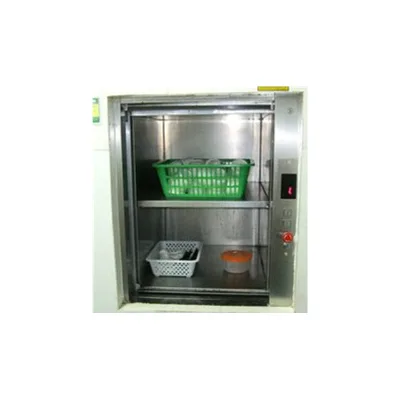
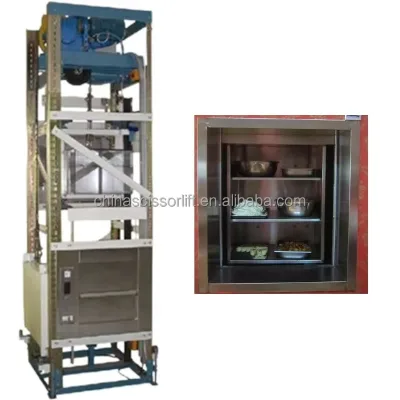
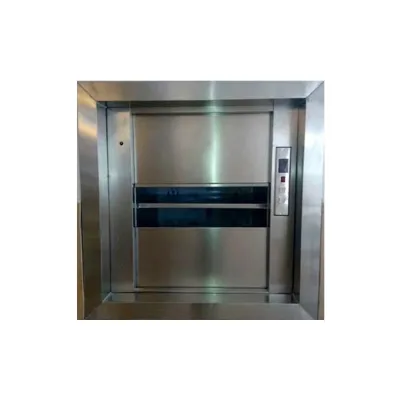


Kitchen Restaurant Home Dumbwaiter Elevator/ Foods Elevator Dumbwaiter
$3998.00 - $4200.00
MOQ: 1 Pieces

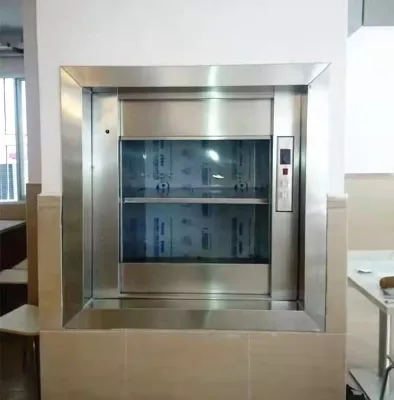
Comprehensive Sourcing Guide
Strategic Sourcing Guide for Stainless Steel Food Dumbwaiter Elevators
Understanding Technical Specifications and Drive Systems
When sourcing a Stainless Steel Food Dumbwaiter Elevator, the primary objective is to identify equipment that aligns with specific operational requirements while maintaining the hygiene standards necessary for food service environments. The market offers a diverse range of configurations, and buyers must carefully distinguish between the various technical attributes presented in product listings. A critical observation in the current supply landscape is the variation in drive systems. Some units are specified with AC drive types, utilizing geared or gearless traction machines, while others employ Variable Voltage Variable Frequency (VVVF) control systems. The choice between a "Step As380" or "Monarch Nice3000 New" drive control system, as seen in specific listings, versus a VVVF system, dictates the smoothness of operation and energy efficiency.
Speed is another pivotal specification that varies significantly across available models. Data indicates that certain high-capacity units operate within a range of 1.00 to 2.00 meters per second, whereas others designed for lighter loads or specific applications may have a rated speed of 0.40 meters per second or less than 1.00 meter per second. This discrepancy requires buyers to match the elevator speed to the throughput needs of their facility. Furthermore, the deceleration mechanism is a safety-critical component; some products are listed as "With Deceleration Device," while others are explicitly marked as "Without Deceleration Device." The presence of this device ensures a smoother stop at the landing, which is particularly important when transporting hot or liquid food items to prevent spillage.
The physical configuration of the elevator also demands scrutiny. The guide rail type, often identified as a "T Guide," supports the car's movement, while the lift mechanism may utilize a "Lift Chain" system. The door configuration is equally variable; options include "Center Opening Doors," "Side Doors," or "Straight Fractional Doors." For food service applications, the "Single" door knife specification is common, but the opening and closing type can range from manual to automated systems. Buyers must verify if the unit is designed as a "Wellhole" type or if it requires a specific machine room configuration, such as "Mrl/Mr" (Machine Room Less or Machine Room), as this impacts the architectural integration of the unit.
Compliance, Certification, and Safety Standards
Navigating the compliance landscape for commercial dumbwaiters requires a rigorous verification of certifications and adherence to international standards. While specific product listings may claim compliance with standards such as ISO9001:2000, ISO14001, OHSAS18001, and ISO9001:2008, buyers must treat these as observations of the supplier's quality management systems rather than guarantees of the specific unit's safety certification. The presence of CE marking is frequently observed in the background data, but its application to the specific model must be confirmed with the manufacturer.
Safety standards are paramount in food service environments where equipment is subject to frequent use and potential contamination risks. Buyers should verify if the product meets the EN 81-31 standard, which is relevant for service lifts, although this should be treated as a verification point rather than an assumed fact. The listed certifications, including ISO14001 for environmental management and OHSAS for occupational health and safety, indicate that the supplier has established processes, but the buyer must ensure these certifications are current and applicable to the specific manufacturing location.
The material composition is a non-negotiable aspect of compliance for food-grade equipment. The "Stainless Steel" material specification is consistently observed, which is essential for hygiene and durability. However, the grade of stainless steel is not always explicitly detailed in general listings. Buyers should request material certificates to confirm the specific alloy grade (e.g., 304 or 316) to ensure resistance to corrosion from food acids and cleaning agents. Additionally, the "Customized" color standard series suggests that while the material is standard, the finish can be tailored, but this customization must not compromise the structural integrity or fire safety ratings of the elevator.
Cost Drivers and Pricing Variables
The pricing structure for stainless steel food dumbwaiter elevators is influenced by a complex interplay of technical specifications, customization levels, and logistical factors. The observed price range in the market spans from 500 to 10,000 USD, a wide variance that reflects differences in capacity, speed, and control systems. A unit with a capacity of 500-1000kg and a speed of 2.00m/s will naturally command a higher price point than a 100-500kg unit with a speed of 0.40m/s. The drive system is a significant cost driver; VVVF systems generally offer superior control and energy efficiency but may come at a premium compared to standard AC systems.
Customization is another major factor affecting the final cost. While "Customization" is listed as available, the extent of this customization—such as specific door finishes, interior lighting, or unique control panel interfaces—will directly impact the price. The "Wooden Case" or "High Quality Export Wooden Case" packaging requirements add to the overall cost, particularly for international shipments. Furthermore, the origin of the product, whether from general China locations or specific hubs like Huzhou, can influence logistics costs and, consequently, the landed price.
Buyers should also consider the "One Year" warranty period as a component of the total cost of ownership. A longer warranty might indicate higher manufacturing quality but could be reflected in a higher initial purchase price. The "MOQ" (Minimum Order Quantity) of 1 suggests that even single-unit purchases are feasible, but bulk orders might offer economies of scale. The "Deliver Time" of "Within 30 Days" is a standard expectation, but expedited shipping or custom manufacturing delays could extend this timeline and affect project budgets.
Typical Applications and Operational Use Cases
Stainless steel food dumbwaiter elevators are primarily designed for environments where hygiene, efficiency, and space optimization are critical. The "Dumbwaiter" classification, often associated with "Complete Lift" functionality, makes these units ideal for restaurants, hotels, hospitals, and commercial kitchens. In these settings, the elevator serves to transport food, dishes, and linens between floors, reducing the need for staff to carry heavy loads via stairs and minimizing cross-contamination risks.
The "Without Attendant" and "Without Computer Room" configurations are particularly suitable for smaller to medium-sized establishments where space is at a premium. The "Collective Selective Control" mode allows for efficient operation in multi-stop scenarios, such as a hotel where food needs to be delivered to various floors simultaneously. The "Serial, Parallel" communication mode ensures reliable signal transmission between floors, which is essential for coordinating deliveries in busy environments.
For facilities requiring higher throughput, units with "Geared, Gearless Traction Machines" and speeds up to 2.00m/s provide rapid transport capabilities. The "Center Opening Door" or "Side Door" options allow for easy loading and unloading of carts or trays. The "Lift Chain" mechanism is robust and suitable for the repetitive lifting cycles typical in food service. However, for applications involving delicate items or specific safety requirements, the presence of a "Deceleration Device" becomes crucial to ensure gentle stops.
Supplier Evaluation and Verification Protocols
Evaluating suppliers for stainless steel dumbwaiter elevators requires a systematic approach to verify claims and ensure reliability. The "Brand Name" and "Brand" variations, such as "Nova" or "Dsk," indicate different manufacturers, but buyers should not rely solely on brand recognition. Instead, focus on the supplier's ability to provide detailed technical documentation and proof of compliance. The "prod_origin" and "prod_origin" locations, such as "China" or "Huzhou, China," should be verified to understand the manufacturing capabilities and logistics infrastructure of the supplier.
When assessing a supplier, request evidence of their "ISO9001:2000" and "ISO14001" certifications, ensuring they are valid and not expired. Ask for specific test results related to the "Deceleration Device" and "Traction Machine" to confirm performance claims. The "Warranty Period" of "One Year" should be clearly defined in the contract, including coverage for parts and labor. Additionally, verify the "Package" specifications, such as the "Standard Export Package" or "High Quality Export Wooden Case," to ensure the product arrives without damage.
Buyers should also inquire about the "Deliver Time" and "Lead Time" to ensure the supplier can meet project deadlines. The "MOQ" of 1 suggests flexibility, but confirm if there are any volume discounts or additional costs for custom orders. Finally, check the "Control Mode" and "Communication Mode" capabilities to ensure the system integrates seamlessly with existing building management systems or control panels.
Quality Control and Long-Term Procurement Considerations
Implementing a robust quality control (QC) process is essential for ensuring the longevity and safety of the dumbwaiter elevator. Buyers should establish clear acceptance criteria based on the "Material" specifications, verifying that the stainless steel meets food-grade standards. Regular inspections of the "Guide Rail" and "Lift Mechanism" should be part of the maintenance plan to prevent wear and tear. The "Open & Close Type" mechanism, whether manual or automated, should be tested for reliability and safety.
Long-term procurement considerations include the availability of spare parts and the supplier's support infrastructure. The "Drive Control System" components, such as the "Step As380" or "Monarch Nice3000 New," should be readily available for replacement. The "Color Standard Series" customization should be documented to ensure future matching if repairs or expansions are needed. The "One Year" warranty period is a baseline, but buyers should negotiate extended warranty options for critical components.
Sustainability is also a growing concern in procurement. The "ISO14001" certification indicates the supplier's commitment to environmental management, which should be leveraged to ensure the product's lifecycle is managed responsibly. The "Deceleration Device" and "Traction Machine" efficiency should be evaluated for energy consumption, as this impacts the operational costs over the life of the elevator. By focusing on these long-term factors, buyers can ensure a reliable and cost-effective investment in their food service infrastructure.
Comparative Analysis of Key Specifications
To facilitate informed decision-making, the following table summarizes the key technical variations observed in the market for stainless steel food dumbwaiter elevators. This comparison highlights the critical differences that buyers must evaluate against their specific operational needs.
| Specification | Option A (High Performance) | Option B (Standard/Light Duty) | Option C (Custom/Compact) |
|---|---|---|---|
| Rated Speed | 1.00 - 2.00 m/s | 0.40 m/s | < 1.00 m/s |
| Load Capacity | 500 - 1000 kg | 100 - 500 kg | < 500 kg |
| Drive Type | AC (Geared/Gearless) | AC | VVVF |
| Control System | Step As380 / Monarch Nice3000 | Standard AC | VVVF |
| Door Type | Center Opening / Side Door | Straight Fractional | Manual / Custom |
| Deceleration | With Device | Without Device | Variable |
| Machine Room | Without Computer Room | Mrl/Mr | Without Computer Room |
| Certification | ISO9001:2000, ISO14001 | ISO9001, OHSAS | CE, ISO9001 |
This table illustrates that there is no single "best" option; the choice depends entirely on the specific requirements of the facility. Buyers must weigh the trade-offs between speed, capacity, and control complexity to select the most appropriate unit. By carefully analyzing these specifications and verifying them against the supplier's documentation, buyers can ensure a successful procurement outcome that meets both immediate and long-term operational goals.
FAQs
What drive systems are available for stainless steel food dumbwaiter elevators?
Available drive systems include AC drive types with geared or gearless traction machines and VVVF control systems. Some units specifically utilize Step As380 or Monarch Nice3000 New drive control systems for operation.
Which speed ranges can be expected for these elevator models?
Speed ranges vary significantly, with some high-capacity units operating between 1.00 and 2.00 meters per second. Other models designed for lighter loads may have a rated speed of 0.40 meters per second or less than 1.00 meter per second.
Can customization be requested for the color and finish of the elevator?
Yes, customization is available for the color standard series to meet specific requirements. Buyers should verify that any customization does not compromise the structural integrity or fire safety ratings of the stainless steel unit.
What certifications are typically listed for these dumbwaiter suppliers?
Listed certifications often include ISO9001:2000, ISO14001, OHSAS18001, and ISO9001:2008. Buyers must treat these as observations of the supplier's quality management systems rather than guarantees of the specific unit's safety certification.
How does the deceleration device affect the operation of the lift?
Some products are listed with a deceleration device while others are explicitly without one. The presence of this device ensures a smoother stop at the landing, which is particularly important when transporting hot or liquid food items.
What is the typical warranty period provided for these elevators?
The standard warranty period listed for these products is one year. This baseline warranty should be clearly defined in the contract, including coverage for parts and labor to ensure long-term reliability.
Which packaging types are used for exporting these stainless steel units?
Products are typically shipped in wooden cases or high-quality export wooden cases. Standard export packages are also used to ensure the product arrives without damage during international transit.